Anthropic moved its Messages API from Python to Rust
Anthropic says the Rust version uses about 70% less CPU per request and cuts median time to first token by about 20%, and that the switch shipped without taking the service offline.
Covers 25 Nov 13:40 to 26 Nov 13:40 SAST · 37 items
Anthropic says the Rust version uses about 70% less CPU per request and cuts median time to first token by about 20%, and that the switch shipped without taking the service offline.
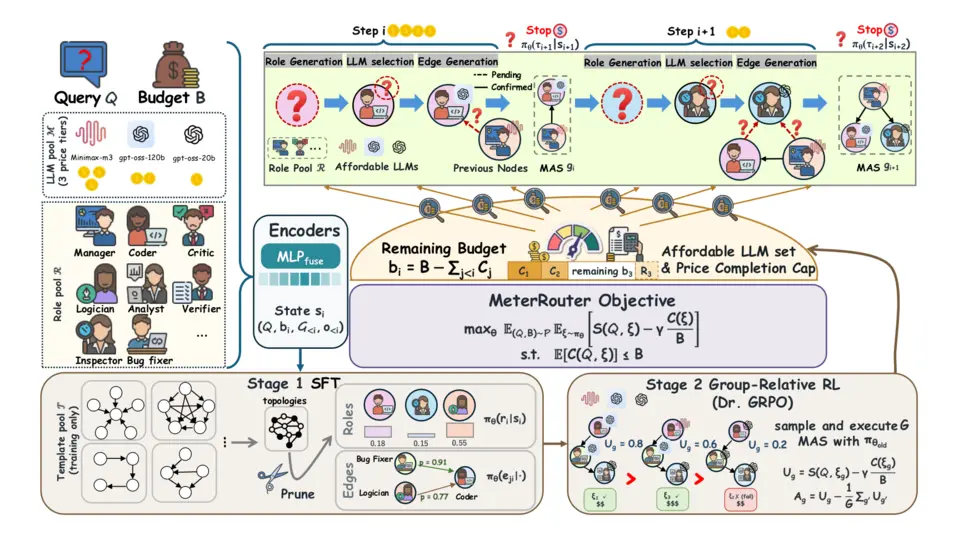
The authors of the MeterRouter preprint say it matches the accuracy of the strongest multi-agent router across five benchmarks at that saving. It picks agents and models within a budget set for each query.
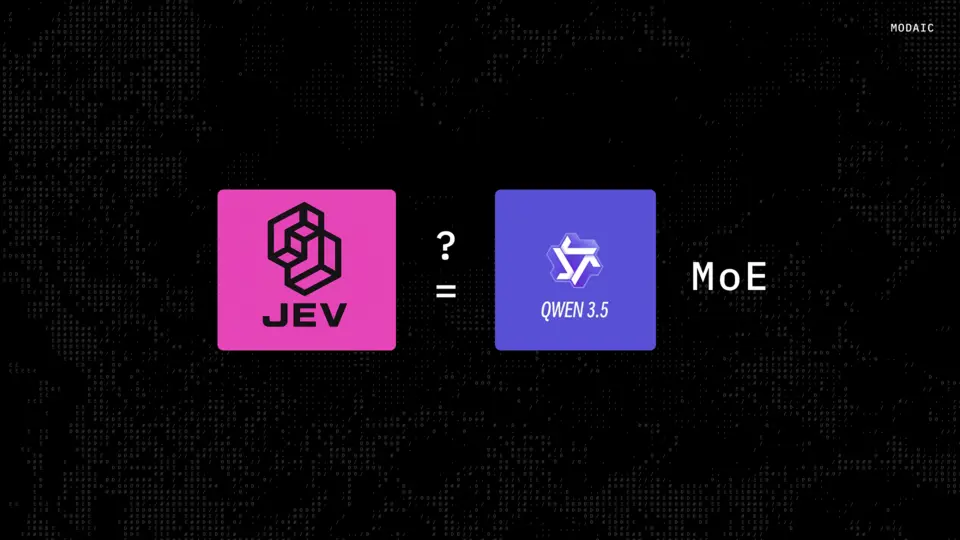
Modaic bases this on self-identification, tokenizer and latency tests, including 9,976 requests to Jev 1.14. TypeSafe does not disclose the backbone and the finding is not confirmed.
Tibo of OpenAI’s Codex and ChatGPT team says a billing mistake at launch discounted their usage for most users, and with it fixed you reach limits 40% faster on Astra and 25% faster on Sol than last week. He says other models are unaffected and past usage is not charged, and Go, Plus, Pro and Business get one banked reset.
Its replacement is llama_batch_ext with llama_process. The release also lets llama-server accept OpenAI’s named tool_choice, adds Inkling 2, MiniMax-M3.1 and other models, and adds --target-bpw and --target-size options for quantization.
OpenAI’s status page lists the incident for ChatGPT, ChatGPT Work and Codex Cloud from 13:48 to 18:12 SAST, and it is now resolved.
The authors of a preprint report that guidance built from both models’ past runs took the lead’s ViBench score from 70.2 to 78.5 at 19% lower cost, and its Terminal-Bench 4.0 pass rate from 54% to 61% at similar cost.
A preprint that tested 805 snapshots from 13 memory methods reports that none of the statistics the authors registered reliably predicted early decline. In long runs the only failure came from prompting with the whole, unbounded store until it exceeded the model’s input capacity, and token growth predicted that one.
Six papers added on 25 Nov include one claiming unconditional integer factorization in time L_N[1/3, O(1)] and one on discrete logarithms in fixed-characteristic finite fields. They are claims in a repository with no peer review shown, and the README says it is not an official Google product.
The author says it is based on Levent Alpöge’s proof with Claude, was produced with Anthropic colleagues and Claude, and has a compact edition of about 76,000 lines. The README says it has passed machine checks only and no mathematician has read it through.
The release notes also list support for updating session vaults.
It now allows only that site and no longer every URL; approvals saved earlier stay as they were. Failed automation runs no longer stop later ones, sending to an archived session unarchives it, there is a new GPT-6.2 system prompt, and tools no longer stay visible to the model when a blanket deny was followed by narrower denies.
For Copilot Business and Enterprise, GitHub says reviews by members with a paid Copilot license will be billed to the organization that owns the repository wherever no billing choice is saved. Selecting “Member” before then keeps current billing.
The advisory (CVSS 7.4) says prompt-injected URLs can reach loopback services, internal hosts and cloud metadata endpoints through DNS names or IPv6 forms. Version 1.2.0 was released on 25 November.
Extension 4.1.28, CLI 3.0.76 and desktop 0.0.51 no longer list ids including gpt-5, gpt-5.1, gpt-5.3-codex and o3. SDK 0.2.2 also changes the default model for 28 providers, removes some telemetry helper exports and drops the options argument from three settings functions.
For GPT 5.2 Codex on SWE-bench Verified, a preprint’s authors report a success-rate estimation error of 0.8 percentage points with their Category Partition selection. No single strategy was best both at estimating the rate and at finding failures early.
The preprint’s authors found four tasks with placeholder skill directories, and a task runner that added 48 built-in skills in most runs. With at most three runs per condition, no task-level drop was statistically significant.
The result comes from one data-analysis task run twelve times, and the preprint’s authors call it exploratory. They also propose a 1 to 5 rubric that scores session transcripts for context problems.
Its README reports 0.10 s median latency and $0.19 per 1,000 searches on one GPU with a 1.2B-parameter open-weight pair, and a score of 70.8 on the public ToolRet test against 73.5 for the best hosted result in its summary table. These are the authors’ own benchmarks.
Built on x86Sim, it installs an .ipa, reads the screen as text, and taps and types, with a command line and an MCP server. The README calls it early and asks for an x86-64 Ubuntu 24.04 machine with 8+ CPUs and 16 GB of memory.
The merged change is not yet in a release and keeps snapshot entries that can be booted and restored. Existing installs are not prompted but can move with omarchy-boot-switch (snapshots taken before the switch then cannot be booted or restored from systemd-boot); BIOS installs stay on Limine, and Secure Boot is not turned on yet.
With the merged change, not yet in a release, pkexec calls from Claude Code, Codex, Copilot, Cursor, Grok or OpenCode show the agent’s icon, and any label sits above the command. Labels set with omarchy.polkit expect never showed before, and the change fixes that.
One migration repoints git’s GitHub credential helper to /usr/bin/gh, after HTTPS git push failed. Another stops the migration failing where a package such as nodejs-lts-jod already provides Node, which had left claude and other agents uninstalled.
github.com/omacom/omarchy/pull/20152github.com/omacom/omarchy/pull/20120
The pull request’s author measured about 155 MiB of VRAM per 4K screen at 1.5x scale. The change relies on a patch to Omarchy’s Hyprland package and is not yet in a release.
Foot gets multithreaded rendering back (workers=0 removed), workspaces left without a monitor can be reached again, and large screen-recording regions are capped at 4K so they encode as H.264. A change to nsswitch.conf stops failed DNS lookups being retried (108.22 ms against 1.47 ms for a cached miss in the author’s test).
github.com/omacom/omarchy/commits/quattrogithub.com/omacom/omarchy/pull/20128
Users with Chromium as their default get a one-time notification with “Switch to Chrome” and “Nevermind” buttons, and it warns that switching logs you out of all sites.
The company says access came through an employee’s corporate GitHub account, and that private source code and the names, email addresses and account metadata of a subset of customers were downloaded; vaults and the keys that protect them were not affected. It says users do not need to change anything but should watch for phishing.
System76’s release is based on Ubuntu 26.04 LTS and adds drawing tablet support, optional automatic updates and new COSMIC applications. LWN reports that upgrades from 24.04 LTS will be enabled in December.
From 17:55 to 18:52 SAST, GitHub’s status updates reported problems with Actions, Webhooks, Pull Requests, Issues, Pages, Git operations, Packages and API requests, and cited high database load. GitHub says a root cause analysis will follow.
The advisory rates 7 issues High and 4 Medium. They include a Pipeline: Groovy sandbox bypass (CVE-2026-136834), fixed in version 4403.4405.va_b_cdb_b_d0b_89f, that lets users who can run sandboxed Pipelines execute code on the controller.
The project lists 16 that cross security boundaries and 5 denial-of-service issues, and advises all users to upgrade as soon as possible.
PowerDNS rates them low to medium and recommends upgrading quickly. They include client IP spoofing and cache pollution in some DNS-over-HTTPS setups.
Jeff Lindsay’s tool keeps the database in a .pgdb directory and starts a server only when a command needs one, without Docker. It is MIT licensed.
It brings back the TLS loading from before 9.2, so an expired certificate in a CA bundle no longer stops the server from starting, and it fixes several crashes. The project rates the upgrade urgency moderate.
The advisory, rated high, says a small crafted document can exhaust memory and CPU through unbounded CSS string-set values. It affects fulgur from 0.4.4 up to 0.28.0, where it is fixed.
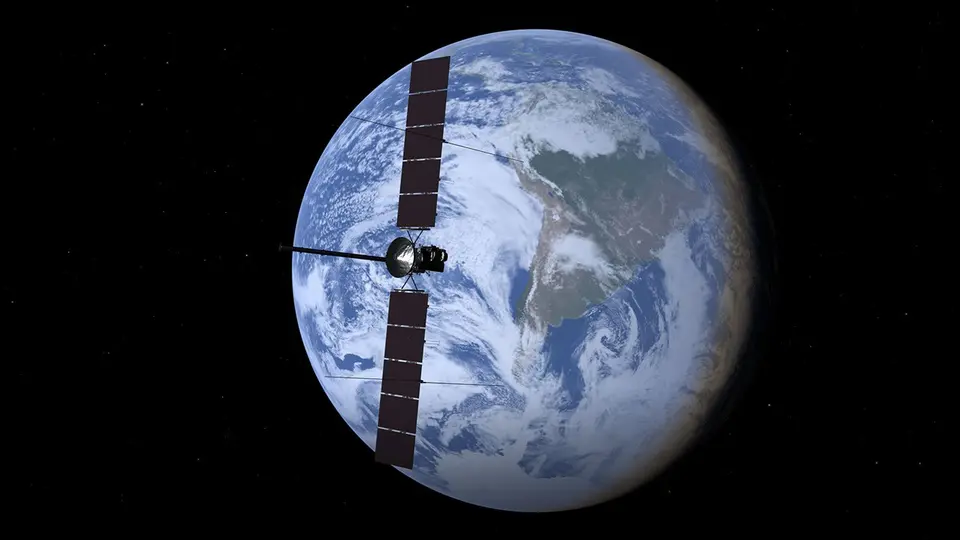
NASA says the Jupiter-bound spacecraft will pass 3,140 to 3,450 km from Earth, closest at 3:14 p.m. EST (22:14 SAST) west of Africa, with all nine instruments collecting data. It is due to begin orbiting Jupiter in April 2030.
The Space Bureau order of 25 November covers up to 1,000,000 satellites (Starmind) in shells from 500 to 1,002 km, but SpaceX may not deploy above 600 km until it files a final orbital debris plan as a modification application. One satellite is due by 25 November 2033, 50% by 25 November 2038 and the rest by 25 November 2040.